
The Vacuum Cleaner Moment That Made Carol Burnett Completely Lose It
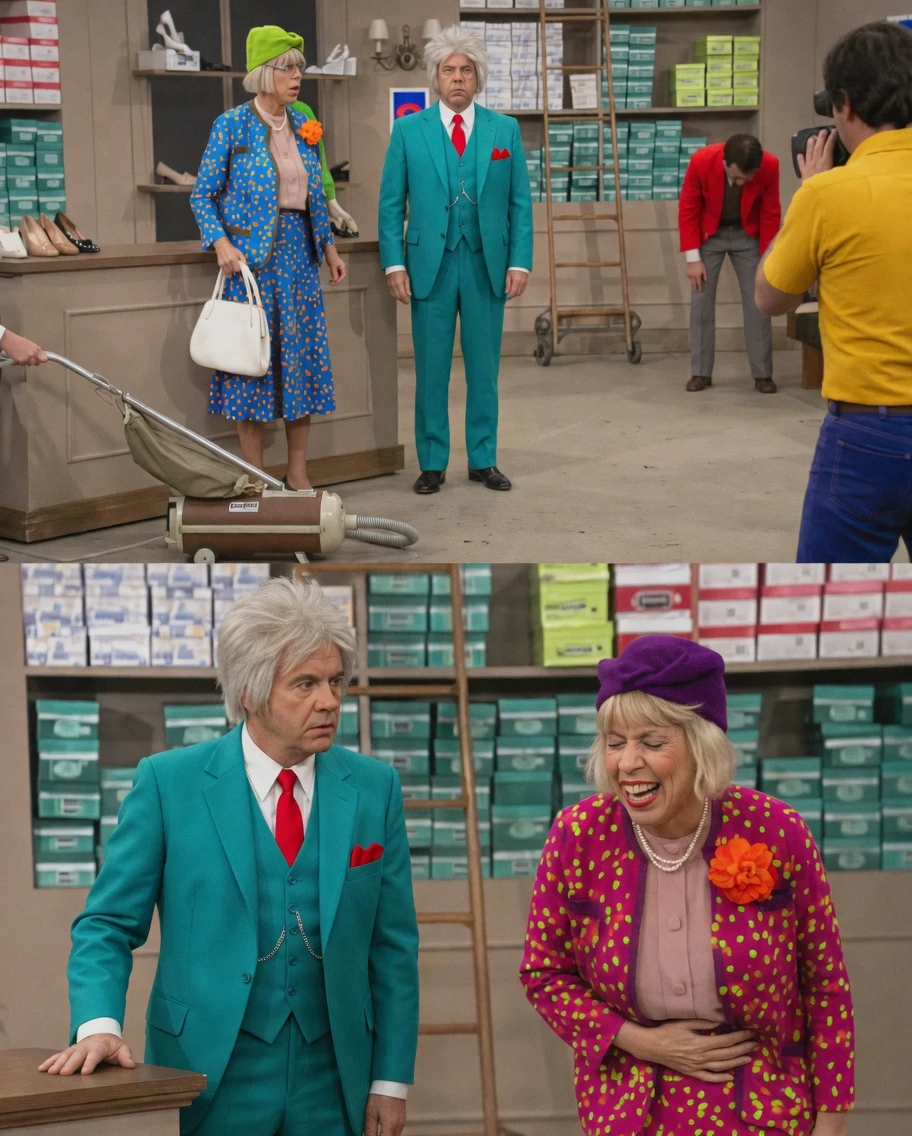
Some comedy moments are unforgettable because of a perfect punchline. Others become legendary because something goes wrong — or appears to go wrong — and the performers turn that mistake into something even funnier than the script.
That is exactly what made Tim Conway such a dangerous comedy partner.
He did not just perform jokes. He created traps. And when Carol Burnett was standing across from him, even one tiny movement could become enough to destroy the entire scene.
The setup seemed simple. A sketch. A vacuum cleaner. Carol trying to stay in character. Tim Conway moving with that slow, innocent rhythm that fans knew all too well. Nothing about the moment looked explosive at first. It was not a giant physical stunt. It was not a wild speech. It was not a loud joke.
It was tiny.
That was the genius.
One small misstep with the vacuum cleaner was all it took. The timing was so perfect, so awkward, and so completely Tim Conway that Carol Burnett could not hold it together. Within seconds, she was doubled over, laughing so hard that the scene seemed to vanish around her.
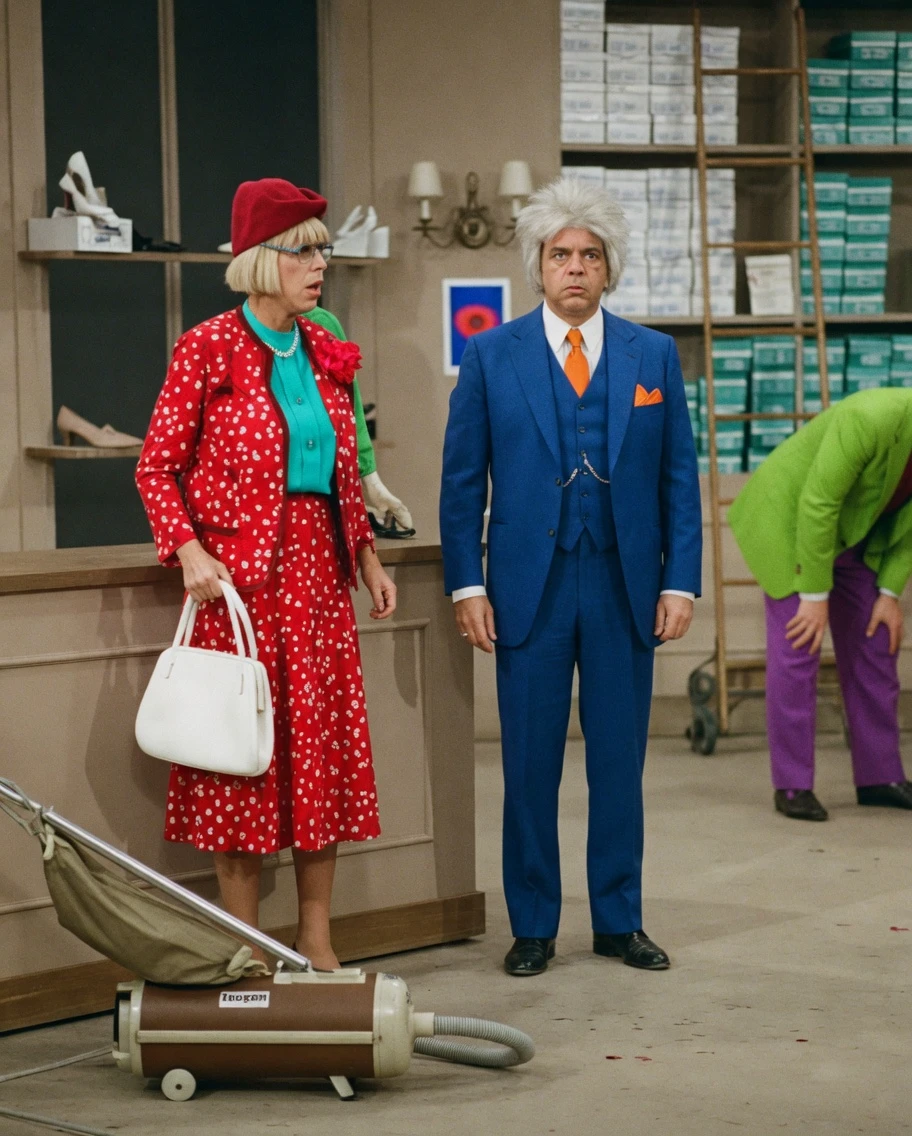
And that is when the real comedy began.
Tim Conway did what he always did best: he stayed calm.
That calmness made everything worse for everyone else. While Carol struggled to breathe, Tim behaved as if nothing unusual had happened. He did not rush to save the scene. He did not break into loud laughter. He did not explain himself. He simply stood there with that deadly blank expression, letting the silence and absurdity grow.
That was his weapon.
Conway understood something few comedians ever master: the pause after the joke can be just as funny as the joke itself. He knew that if he waited long enough, the audience would laugh harder. If he stared just a little longer, Carol would crack even more. If he kept moving slowly, the entire sketch would become a battle of survival.
Carol Burnett was one of the greatest comedy performers in television history. She could sing, act, improvise, parody, and control a scene with remarkable skill. But even she had limits. And Tim Conway seemed to know exactly where those limits were.
That is why fans loved watching them together.
The humor was not only in the written material. It was in the relationship. Carol would try to keep the sketch alive. Tim would quietly push it toward disaster. The audience would sense the collapse coming before it fully happened. That anticipation made every second funnier.
In this vacuum cleaner moment, Carol’s laughter became part of the performance. She was not simply breaking character. She was showing the audience the true power of Conway’s timing. Her reaction told viewers that what they were seeing was not ordinary. It was one of those rare comedy moments when even the professionals were overwhelmed by the joke.
The camera operators reportedly had to follow the chaos as best they could. The cast could barely keep going. The audience was roaring. But Tim remained completely committed to the bit. That contrast — everyone else falling apart while Conway stayed perfectly still and serious — is what made the moment so brilliant.
He looked innocent.
He was not.
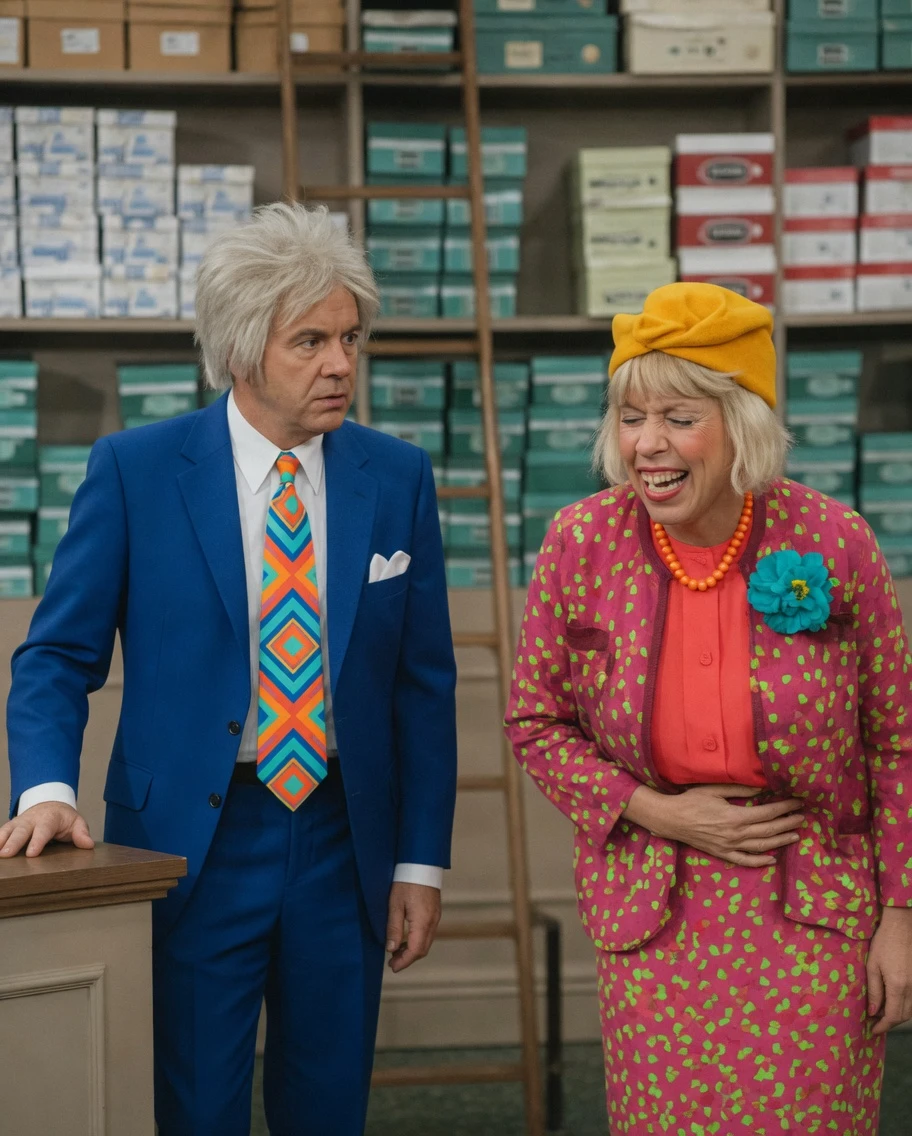
Tim Conway was a master of comic sabotage. He knew how to use his body, his eyes, his pauses, and his quiet delivery to make other performers helpless. With Harvey Korman, he often caused full character breaks. With Carol Burnett, he created a different kind of magic: the joy of watching one comedy legend get ambushed by another.
What made it even funnier was that Carol tried to recover. She did not give up immediately. She fought for control. She tried to pull herself back into the sketch, to regain the scene, to keep the performance moving. But Conway kept applying pressure without seeming to do anything at all.
A stare.
A pause.
A tiny movement.
That was all he needed.
By the end, the sketch was no longer just about a vacuum cleaner. It was about laughter itself taking over the room. It was about watching a controlled performance become something alive and unpredictable. It was about the audience realizing they were witnessing a moment that could never be repeated the exact same way again.
That is why clips like this still matter decades later.
They remind people of a kind of comedy that did not need shock value, expensive effects, or complicated setups. It only needed brilliant performers, perfect timing, and the willingness to let a scene breathe long enough for chaos to take over.
Tim Conway’s genius was that he made disaster look effortless.
Carol Burnett’s genius was that even when she broke, she made the moment more joyful.
Together, they turned one tiny vacuum cleaner mishap into classic television gold.
And that may be the real reason fans still love it. The moment feels human. It feels spontaneous. It feels like laughter winning against professionalism, control, and the script itself.
Tim Conway did not just make Carol Burnett laugh.
He slowly, carefully, and brilliantly dismantled her composure.
And the audience got to watch every second of it.


