
When a Comedy Sketch Becomes the “Perfect Disaster”: Tim Conway and the Art of Breaking Every Rule on Stage
In the history of American television comedy, there is one thing no script can ever fully control—and it’s also what audiences love most: total, unpredictable loss of control on live television. No one understood and exploited that better than Tim Conway, a man with the rare ability to turn seemingly simple scenes into unstoppable storms of laughter. And his most frequent “victim”? None other than Harvey Korman.
In one famous sketch from The Carol Burnett Show, the setup is incredibly ordinary: a museum security guard explaining his job. Nothing unusual. Nothing to suggest that within minutes, the entire scene will unravel in the most hilarious way imaginable.

And then Tim Conway starts talking.
Not in a normal way. Not fast. Not efficient. He stretches every sentence, pauses at just the right moment, and stares off into the distance as if contemplating something deeply important—when in reality, he’s guiding everything into complete absurdity. Each explanation about his job becomes longer, more pointless… and somehow funnier.
From the very first moments, you can see Harvey Korman begin to “sense danger.”
His eyes shift. His mouth tightens. His body stiffens—like a man trying to resist the inevitable. Korman was a brilliant actor, known for his ability to stay composed under pressure. But with Tim Conway, it was a battle he was almost destined to lose.
Conway wasn’t just telling a story—he was building absurdity, slowly and deliberately. He didn’t rush toward a punchline. Instead, he pulled both the audience and his scene partner into a strange rhythm, where everything became funnier simply because it went on too long.
Every pause had intention.
Every glance was a strike.
Every line was a trap.
And then, the inevitable happens.
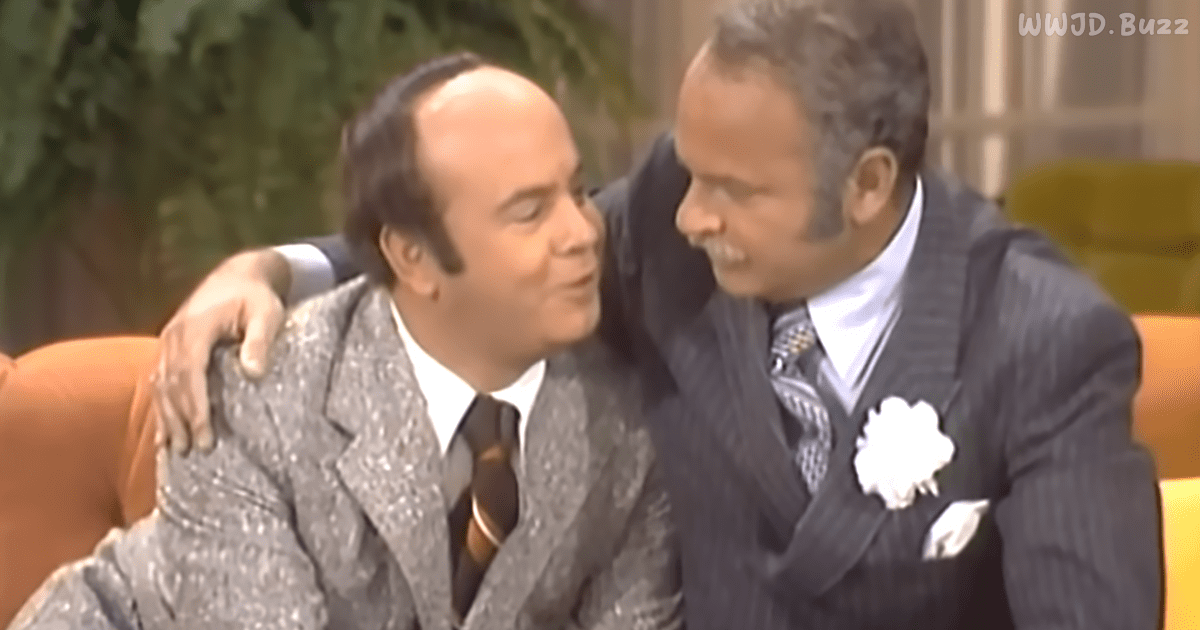
Korman’s shoulders begin to shake. His lips press together, losing control. He turns away, trying to hide the smile breaking through. But Conway doesn’t let him escape. He pushes further—adding another ridiculous detail, another slow line, another “serious” look so exaggerated it becomes absurd.
The audience erupts.
This is no longer polite laughter—it’s explosive, uncontrollable, filling the entire studio. They’re not just laughing at the sketch anymore; they’re laughing at the very real collapse happening in front of them.
And then Korman breaks.
Completely.
He can’t hold it in. His smile bursts into genuine laughter. His body folds, he turns away, trying to recover—but it’s hopeless. From that moment on, the scene is no longer a scripted sketch.
It becomes something else entirely.
A living, breathing moment where the line between performance and reality disappears.
What’s truly remarkable is that Tim Conway seems to know this would happen all along.
He never loses control. In fact, he controls the chaos perfectly. While everyone around him is falling apart, he remains calm, continuing the scene as if nothing unusual is happening. That contrast—Conway’s composure versus Korman’s collapse—is what creates one of the most iconic comedic moments in television history.
This is the genius of Tim Conway.
He didn’t need sharp punchlines or complex setups. He relied on timing, rhythm, and an almost uncanny ability to read his scene partners. He knew exactly when to pause, when to speak, and when to push everything beyond its limits.
By the end, the sketch barely resembles its original script. But that doesn’t matter. In fact, it’s precisely that departure from the script that makes it unforgettable.

Audiences don’t just remember the jokes—they remember the feeling. The feeling of witnessing something real, something unscripted, something that could never be replicated in exactly the same way again.
In today’s entertainment world, where everything is often tightly controlled, moments like these are rare. And because of that, they are even more valuable.
Tim Conway proved that sometimes, the funniest thing isn’t what’s written—
It’s what happens when everything falls gloriously, perfectly out of control.
And perhaps that’s exactly what Harvey Korman feared most…
and what made him an essential part of those legendary moments.


