
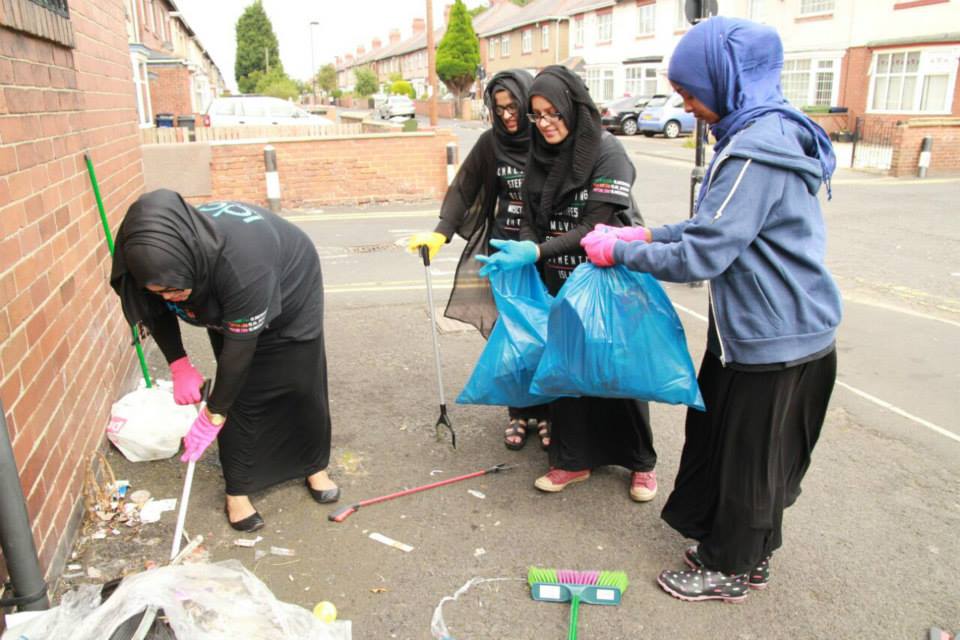
SHOCKING MOVE: A single moment captured on camera has ignited a nationwide debate in the UK, after officers from Greater Manchester Police were seen instructing a family to clean up litter believed to be theirs, a scene that quickly spiraled into one of the most talked-about and divisive social media flashpoints in recent weeks.
The footage, which spread rapidly across platforms, shows officers calmly but firmly asking individuals to take responsibility for waste left behind in a public area, a move that some viewers have hailed as a long-overdue stance on personal accountability, while others have questioned whether the situation was handled fairly, proportionately, or without bias.
---2026-04-01T101155_412.webp)
As the clip continues to circulate, millions of users are weighing in, transforming what might have been a routine enforcement of local cleanliness regulations into a broader conversation about policing, equality, and public perception in modern Britain.
Supporters of the officers argue that the action reflects a simple principle that should apply to everyone regardless of background: if you make a mess, you clean it up, no exceptions. They point to growing frustrations in many UK cities over littering, environmental neglect, and the strain it places on local councils, emphasizing that visible enforcement can serve as a deterrent and reinforce shared civic responsibility.

For these voices, the moment represents not controversy, but clarity—a signal that rules are being applied on the ground, not just written on paper. Many commenters have gone further, suggesting that consistent enforcement like this could help restore public trust in local authorities, especially in areas where residents feel standards have slipped over time.
Yet on the other side of the debate, critics are raising concerns that go beyond the act itself, focusing instead on context, tone, and perception. Some question whether similar situations are handled the same way across different communities, while others worry that incidents like this, when amplified online, risk fueling division or reinforcing stereotypes if not carefully understood.

This tension highlights a deeper and more complex issue: in an age where every interaction can be recorded, shared, and dissected, even routine policing decisions can take on symbolic meaning far beyond their original intent. What one person sees as fairness, another may interpret as targeting, and the speed of social media leaves little room for nuance before opinions harden.
Experts in public policy and community relations note that policing has always walked a fine line between enforcement and perception, but that line has become even thinner in the digital era. Transparency, consistency, and communication are now just as important as the actions themselves, particularly when incidents involve communities that may already feel scrutinized or misunderstood.
At the same time, environmental advocates have entered the conversation, stressing that the underlying issue—littering—should not be lost in the debate. The UK, like many countries, continues to grapple with waste management challenges, and public behavior plays a significant role in shaping the cleanliness and livability of shared spaces.
They argue that accountability, when applied fairly and respectfully, is a necessary part of addressing the problem, and that the focus should remain on encouraging better habits across all communities rather than allowing the discussion to become polarized along social or cultural lines.

Still, the viral nature of the incident has ensured that it is no longer just about litter or a single interaction. It has become a mirror reflecting broader societal questions: How should authority be exercised in diverse communities? What does equal treatment look like in practice? And how do we balance enforcement with sensitivity in a way that builds trust rather than erodes it?
Social media, as expected, has amplified every angle of the story, with hashtags trending, clips being re-edited and reshared, and commentary ranging from thoughtful analysis to emotionally charged reactions. In many ways, the response itself has become as significant as the original event, revealing how quickly narratives can form and spread in today’s interconnected world.
What makes this moment particularly powerful is its ambiguity—there is no single, universally accepted interpretation, and that uncertainty is precisely what keeps the conversation alive. People are not just reacting to what they see, but to what they believe it represents, bringing their own experiences, concerns, and expectations into the discussion.
As the debate continues, one thing is clear: incidents like this do not exist in isolation anymore. They become part of a larger story about society, responsibility, and the role of institutions, shaping opinions far beyond the immediate context in which they occur.
Whether viewed as a necessary act of accountability or a moment that raises difficult questions about fairness and perception, this case has undeniably struck a nerve, prompting conversations that extend well beyond a single street in Greater Manchester.
And as more voices join in, the story continues to evolve, reminding everyone watching that in today’s world, even the smallest actions can spark the biggest debates.


